
62 lines
2.3 KiB
Markdown
62 lines
2.3 KiB
Markdown
## [洛谷 $P1862$ 输油管道问题](https://www.luogu.com.cn/problem/P1862)
|
||
|
||
|
||
|
||
|
||
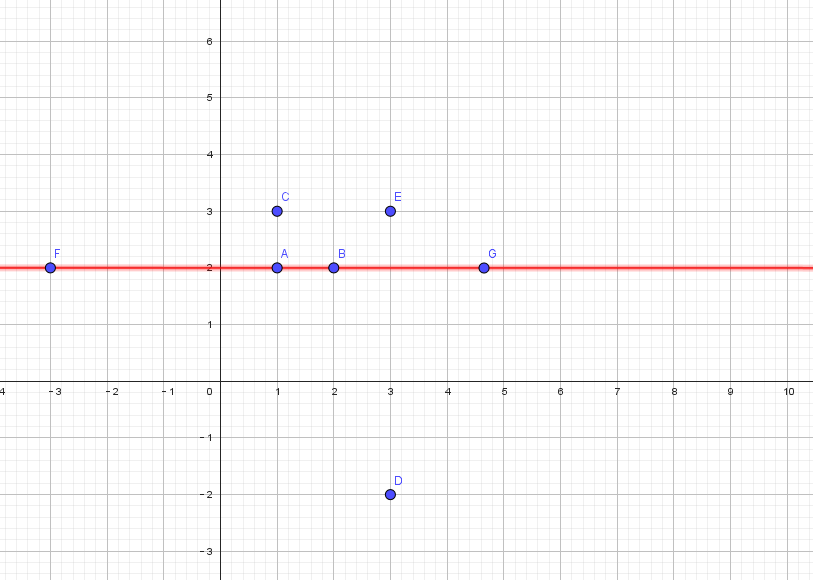
如果只有一口井,那么显然是越近越好。如果有两口井,那么显然是有以下三种情况:
|
||
- 两口井都在主管道北边,那么这个时候的两个连接管道的长度和肯定大于两口井的$Y$坐标之差。
|
||
|
||
- 两口井都在主管道南边,和情况1是一样的
|
||
|
||
- 两口井,一个在主管道南边,一个在主管道北边,那么两个连接管道的长度和就等于两口井的$Y$坐标之差。
|
||
|
||
显然情况三是所要的最短管道的设计情况。就是当主管道在两口井之间的任意位置时,连接管道长度之和都等于两口井的$Y$坐标之差,是最短的长度。
|
||
|
||
那么将这个结论推广,当有$n$口井的时候,
|
||
|
||
- $n$是偶数 只要这$n$口井分布在主管道的两边,一边$n/2$个,那么就是距离之和最小的。
|
||
|
||
- $n$是奇数,只要将这$n$个井中,$Y$坐标最中间的(也就是$Y$是中值的那个)井不算,其余的偶数个井分布在主管道的两侧,这个时候移动主管道,那么这$n$个连接管道长度之和就决定于那个没有算的井了,因为其余的井的距离之和是固定了的,这个时候只要主管道最接近那个点就好了。
|
||
|
||
也就是说,输油管道的位置就是最中间的那口井(或中间的区间)。我的方法是将各口井的$y$坐标排序($x$坐标不用管),再取 $n$ $div$ $2$+$1$ 的位置,即最中间的位置。
|
||
|
||
```cpp {.line-numbers}
|
||
#include <bits/stdc++.h>
|
||
using namespace std;
|
||
|
||
const int N = 10005;
|
||
/*
|
||
文件名:petroleum
|
||
题目:洛谷 P1862 输油管道问题
|
||
题目网址:https://www.luogu.com.cn/problem/P1862
|
||
|
||
输入:
|
||
5
|
||
1 2
|
||
2 2
|
||
1 3
|
||
3 -2
|
||
3 3
|
||
输出:
|
||
6
|
||
*/
|
||
|
||
int n, a[N]; // a[0..n-1]。第i口油井的纵坐标在a[i]
|
||
|
||
int main() {
|
||
// 输入数据
|
||
cin >> n;
|
||
for (int i = 0; i < n; i++) cin >> a[i] >> a[i]; // 横坐标说没有用的,可以直接抛弃掉
|
||
|
||
// 排序
|
||
sort(a, a + n);
|
||
|
||
// 两端对称取长短。中位数原理。
|
||
int sum = 0;
|
||
for (int i = 0, j = n - 1; i <= j; i++, j--) sum += a[j] - a[i];
|
||
|
||
cout << sum << endl;
|
||
return 0;
|
||
}
|
||
|
||
``` |